Leveraged Buyout: What Makes A Strong LBO Candidate?

In this article, I’ll discuss the characteristics that define a strong LBO candidate, but before proceeding further, you may want to review my previous article on “Leveraged Buyout: An Overview”.

During the due diligence process, the financial sponsor evaluates the characteristics of an LBO candidate (including its strengths and risks). Most of the time, an LBO candidate will be one or combination of the following, but irrespective of the situation, the target becomes a LBO opportunity only if it can be acquired at a price and using a financing structure that generates acceptable returns with a viable exit strategy.

  • Non-core or under-performing business unit of a large enterprise
  • Distressed company with a turnaround potential
  • A public company that is perceived as undervalued
  • A public company that is considered as a high growth potential but not being exploited by its current management
  • A solid performing company with a compelling business model, defensible competitive position and strong growth potential. This may also tally with the above point
  • Companies in fragmented markets that can be consolidated into a single entity with higher size, scale and efficiency. This is called roll-up strategy.
[Click to continue reading]

Leveraged Buyout (LBO): An Overview

LBOIn the past two weeks, I have written 22 articles, covering finance concepts, business strategy and advanced finance. This week onwards, I’m thinking of dedicating my articles to advanced finance, spending the next few weeks on one of my favorite topics in finance, the Leveraged Buyout (LBO), which is nothing but an acquisition of a target by some smart investors using debt to finance a large portion of the purchase price.

While it’s unclear about its history, it’s generally believed that LBOs were carried out in the years following World War II. Back in 1970s and 1980s, firms like Kolberg Kravis Roberts and Thomas H. Lee Company saw an opportunity to profit from companies that were trading at a discount to their net asset value through bust-up approach – buy the company, break them up and sell off the pieces (what is called the corporate raiding).

In this article, I’m going to present an overview on LBO, followed by a series of articles, discussing its characteristics, sources of capital, financing structure, economics and exit strategies. After reading this post, do leave your sincere thoughts in the comments section below.

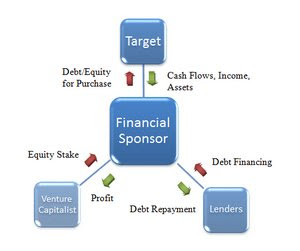
As briefed above, a leveraged buyout is an acquisition of a company, business, division or asset that is financed with a combination of equity and borrowed funds (also called debt). The equity portion contributes 30 – 40% to the purchase price and debt portion 60 – 70%. This disproportionately high level of debt is secured by the target’s projected free cash flow (FCF) and asset base which enables the sponsor to contribute a relatively small portion of equity to the acquisition price. The ability to borrow such high levels of debt based on a small equity investment is vital to the financial sponsor to earn an acceptable return. This high level of leverage also provides a tax shield – they save on the taxes because interest expense on debt is tax deductible. The image above depicts the flow of funds and how it works. Pay attention to the arrows.

[Click to continue reading]

What is Enterprise Value? How do you calculate it?

EVEnterprise Value (EV) or Firm Value is an economic measure that indicates the total value of a company. It measures how much an acquirer needs to pay to buy a company. It’s one of the fundamental metrics used in business valuation and portfolio analysis.

Enterprise Value is considered to be more comprehensive and accurate than market capitalization while valuing a business. It takes into account not only the equity value of the company, but also its debt, cash and minority interest. Market capitalization, on the other hand, includes only common equity (leaving out important factors like company’s debt and its cash reserves.)

Calculating Enterprise Value of a firm

Simply put, Enterprise Value is the sum of market capitalization and net debt of a company. Mathematically,

Enterprise Value = Market Capitalization + Debt + Preferred Stock + Minority Interest + Pension Liabilities and other debt-deemed provisions – Cash and cash equivalents – “Extra Assets” – Investments

Where,

  • Market Capitalization is the price of each share  x   number of common shares outstanding. So, if a company has 100 common shares outstanding with each share selling at $10, its market capitalization will be $1,000.

[Click to continue reading]

Hybrid Security: Convertible Bonds and Convertible Preferred

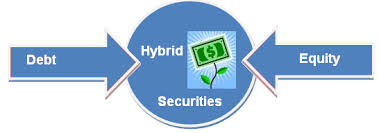
HybridAs the name suggests, the convertible bonds and convertible preferred (or convertibles, in short) are securities that offer the holder the option of converting them into or exchanging with a predetermined number of common shares in the issuing company. They are hybrid securities that demonstrated the features of both equity and bond. Convertibles are issued by a company (also referred to as borrower) when a lower interest rate or dividend is desired and the issuer is willing to suffer the potential dilution of the investor converting the hybrid into common equity of the issuing company. Also, refer my article Equity: Common Stock, Preferred Stock and Convertible Preferred here.

Historically, the interest rates or dividend rates on convertibles have been lower than that of a similar non-convertible debt. The investor funds the company with the believe that the value of the underlying stock, into which the debt will convert, will grow over a period of time to an amount that exceeds a market rate of return for the instrument. In other words, the investor receives the potential upside of the conversion into common equity while protecting the downside with cash flow from the interest payments and the return of principal amount at maturity. However, if the stock delivers an under performance, the conversion does not make sense and the investor is stuck with a sub-par bond rate.

[Click to continue reading]

Equity: Common Stock, Preferred Stock and Participating Preferred

stockA company’s equity capital is represented by common stock or preferred stock. A company can be capitalized with only common stock, but usually preferred stock is issued along with common stock. Both common and preferred stocks are entitled to receiving dividends, but where both of them are outstanding, preferred stock holders enjoy priority. Let’s understand the concept in detail.

Common Stock

Common stock is a type of equity security that represents an ownership in a company. It can be classified into voting shares and non-voting shares. The holder of a voting stock carries a voting right to elect Directors of the company and to vote company’s fundamental corporate activities (including M&A) and policies. A non-voting stock, on the other hand, has all the financial rights of the common stock, but is devoid of the power to choose directors or veto corporate transactions.

During liquidation, the common shareholders are entitled to receive residual claim on the company’s assets that is, they stand at the last behind all the corporate creditors and preferred shareholders for receiving the payment. When a company is forced into bankruptcy because of its inability to pay its obligations (debts), the common shareholders receive nothing. So, their returns are uncertain, contingent to earnings, company reinvestment, market efficiency and stock sale. Since their investment risk is high, common stockholders enjoy higher returns (with higher capital appreciation) compared to preferred stockholders when the company does well.

[Click to continue reading]

Cost Cutting: Steps, Strategies and Precautions

CostCuttingOften companies launch new products, expand businesses (globally), diversify their portfolio or start new businesses with the aim of enhancing growth and increasing profitability. But in industries which have low barriers to entry and exit, new players enter the market by replicating existing business models and offering similar products and services at lower cost, thereby making it difficult for the existing players to sustain their market share. As the revenue growth per player shrinks over the years, companies explore ways to maintain their profit margins, leading to a situation where cost becomes more important and price becomes one of the key differentiating factors in the market.

In such situations, senior management start hunting for measures to reduce their costs and expenses to improve profitability. Cost cutting (also known as cost reduction) is one of the steps initiated by the Business Managers to improve profitability. The Leaders make an effort to monitor, evaluate and trim their expenditures, and explore options to streamline processes, restructure their organization and cut down flawed expectations. Cost reduction can be a formal company-wide program or limited to a single department. It usually becomes a company-wide initiative during economic recession when their revenue growth struggles and profit margins shrink consistently for quarters.

In this article, I offer my views on few steps, strategies and precautions while taking up a critical project like cost-cutting and run you through some of my thoughts. I welcome your views and suggestions in the comments section below.

(1) First step in the entire process is to identify a target – how much to cut? This requires a lot of deep-dive, number crunching, hour long sessions with your Business Head(s) to determine how much would be an effective range. You might have to identify the broken strategies, half executed business plans or even stop promising opportunities. As we brainstorm the numbers, we need to look at them from the perspective of 5 year strategic plan.

[Click to continue reading]